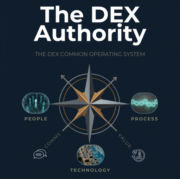
DEX-COS: The DEX Common Operating System
A vendor-neutral operating standard for Digital Employee Experience programs — defining how DEX is structured, measured, and sustained at scale.
What Is DEX-COS?
DEX-COS stands for the Digital Employee Experience Common Operating System. It is not a tool. It is not a vendor product. It is an operating standard, a structured, vendor-neutral framework that defines how a DEX program operates across its People, Process, and Technology.
Think of it as the operating system for your DEX program. Just as Windows or macOS provides a consistent platform for applications to run on, DEX-COS provides a consistent platform for your DEX activities to run on, regardless of which tools you use or how your organization is structured.
The DEX-COS was developed by Tim Flower, author of Digital Employee Experience for Dummies (Wiley, 2022), and the upcoming book The DEX Compass, drawing on more than 35 years of enterprise IT experience and direct involvement in building and scaling DEX programs globally.
DEX-COS at a Glance
- Three structural layers: People, Process, Technology
- Two overlays: Communications and Value
- Five maturity levels from Reactive to Strategic
- Seven operational domains
- Works with any DEX toolset
- Validated by a Practitioner Advisory Council
The Three Layers
DEX-COS is built on three interdependent structural layers. Each layer must be addressed for a DEX program to function at scale.
People
Roles, responsibilities, skills, and organizational structure. The People layer defines who runs the DEX program, what they own, and how they interact with the rest of the organization. It includes the RACI model, persona definitions, and DEX team design principles.
Process
The operational cadence of a DEX program. The Process layer defines how signals are collected and validated, how friction is prioritized, how changes are governed, and how value is measured and communicated. It is the engine that keeps the program moving.
Technology
The tooling that powers DEX visibility and action. The Technology layer defines how DEX platforms are selected, deployed, and governed. It is intentionally vendor-neutral — any platform that delivers the required capabilities can fulfill this layer.
Two Overlay Frameworks
Communications Overlay
Defines how DEX insights and outcomes are translated into messages that resonate with different audiences — from IT operations to the C-suite. Without a communications framework, even excellent DEX results go unrecognized.
Value Overlay
Defines how DEX program outcomes are quantified and connected to business value. The Value overlay gives DEX leaders the language and structure to demonstrate ROI, justify investment, and earn a seat at the strategic table.
The Five Maturity Levels
DEX-COS defines five maturity stages, from programs just getting started to those operating at full optimization.
| Level | Name | Description |
|---|---|---|
| 1 | Reactive | DEX activity is unplanned and incident-driven. No structured program exists. |
| 2 | Responsive | DEX visibility tools are in place. Data is collected but not yet acted on systematically. |
| 3 | Proactive | Defined processes are in place for signal collection, prioritization, and governance. |
| 4 | Preventative | The program anticipates issues before they affect users and drives continuous improvement. |
| 5 | Strategic | DEX outcomes are tied to business value. The program operates with full organizational alignment. |